No Goals, Just Vision
Nov 04, 2026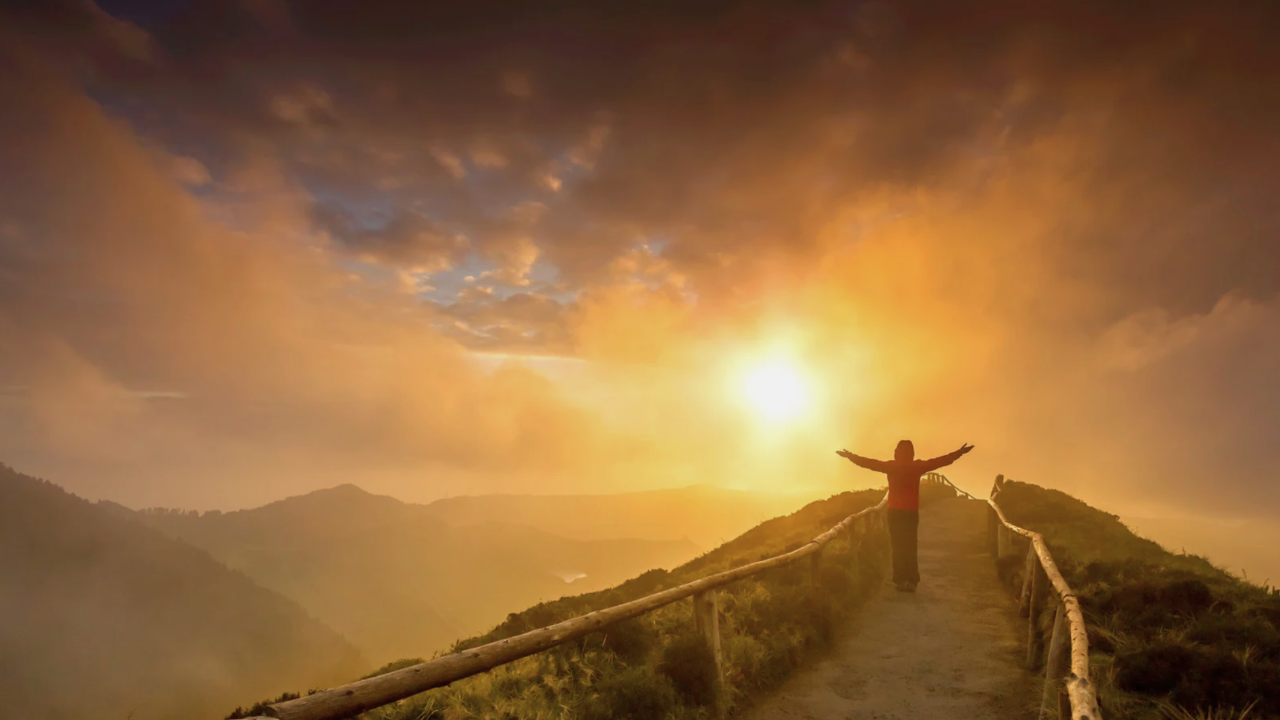
From a young age most of us are taught the importance of having goals. We set goals for our careers, finances, relationships, health, and even our personal and spiritual growth. We learn to measure progress by what we accomplish, and we're encouraged to keep looking ahead toward the next thing we want to achieve.
There's nothing inherently wrong with having goals. They may give us direction or help us organize our efforts. But along the way, it's easy to start believing that our happiness, peace, and sense of fulfillment depend on reaching them.
I'll feel better when I have more financial stability. I'll be at peace when this situation is resolved. I'll finally enjoy life when I get to where I want to be.
So we spend much of our energy working toward a future in which we imagine everything will finally fall into place.
But there is another way to approach life.
What if instead of constantly setting goals and trying to make things happen, we learned to live with a clear vision of what we want while allowing life to unfold naturally?
This is an important distinction found in the ancestral teachings transmitted by our ancestors.
[Listen to the episode 👇🏼]
The Difference Between a Goal and a Vision
Our ancestors had a beautiful way of approaching life. Rather than becoming attached to goals and everything they needed to accomplish, they learned to live with a clear vision for their life. And there is an important difference between the two.
When we set a goal, we often focus on everything we need to do to make it happen. And there’s a risk that without realizing it, something that began as a beautiful desire can become a source of pressure and frustration.
Having a vision invites us to approach things differently.
We can imagine the life we sincerely want to live, the relationships we want to cultivate, the things we would like to experience, and the being we would like to become. We can have a beautiful and clear vision of our future without needing to know exactly how everything will happen.
In the ancestral understanding, we hold that vision in our hearts and offer it to the Great Spirit, with humility and trust. This doesn't mean that we stop taking action or caring for our responsibilities. It means that we stop turning everything we desire into something we must struggle to achieve.
We continue doing what is ours to do, but without becoming attached to how or when things must happen. And here’s something important to understand about this way of living: our vision is not only about what we hope to experience in the future. It is also about the way we choose to live today.
Peace & Harmony are not my Goals, They are my Way of Life
There is a teaching from our elder that says:
Peace, harmony, and well-being are not my goals. They are my way of life.
This is a simple teaching, but it changes the way we understand our purpose.
Many times, we think about the life we want in terms of the things we hope to achieve. We want to have a peaceful home, loving relationships, good health, and enough resources to live well. These are beautiful desires. Yet we can become so focused on creating those conditions that we begin to postpone the very things we're hoping to experience.
We tell ourselves that we'll be more peaceful when a difficult situation is resolved, that we'll enjoy life more when we have greater financial stability, or that we'll finally feel fulfilled when we accomplish something we've been working toward. In the meantime, our days continue to pass.
Our ancestors understood that our purpose in life is not simply to arrive at a particular destination. Our purpose is to become a channel through which well-being can flow.
This means that peace, happiness, and harmony are not only things we wish to receive from life. They are also qualities that we can learn to bring into the way we live; into our relationships, into the work we do, into the way we care for our home, and into the way we respond when life brings us something unexpected.
Of course, there will be difficult moments. There will be things we don't understand, situations that make us uncomfortable, and experiences that require patience and courage. Living with peace doesn't mean that we never encounter difficulties. It means learning to move through those experiences without losing ourselves in the struggle.
And this brings us to another essential part of the teaching: we can have a beautiful vision for tomorrow, but the only moment we can truly take care of is the present.
This Moment is the Only Thing I Have Control Of
Perhaps one of the most practical parts of this teaching is also one of the simplest:
The only thing we can truly take charge of is the present.
We can imagine the future, make plans, and hold beautiful intentions. But the only place where we can actually live, make choices, and give our attention is here and now. We can prepare a meal with love, do our work with care, enjoy time with the people around us, and give ourselves permission to rest when we need it.
These might seem like small things, but they are the substance of our lives. Oftentimes we become so focused on creating a beautiful future that we forget to enjoy the life we already have. And if we approach our days with constant pressure, even the things we love can begin to feel like obligations.
The invitation is to find a natural rhythm to do what needs to be done, to do it well, and to find enjoyment in the process whenever possible.
There will still be difficult moments. There will be days when we feel tired, overwhelmed, or uncertain. These experiences are part of life. But we can learn to recognize when we need to slow down, take a moment to rest, or stop forcing something that isn't flowing. Because in the natural design of creation, everything that is forced breaks.
Live One Day at a Time
In essence, having a clear vision means allowing ourselves to recognize what is beautiful and meaningful to us, while learning to live in a way that reflects those values today.
- If we envision a peaceful life, how can we bring a little more peace into this day?
- If we envision loving relationships, how can we be more present and caring with the people we love?
- If we envision a life of greater freedom and joy, where might we be creating unnecessary pressure for ourselves?
These questions bring our attention back to the place where change is possible.
And perhaps this is one of the greatest gifts of living with vision: we no longer have to postpone our well-being until everything is exactly as we imagined. We can begin enjoying our lives while they are still unfolding.
We can dream without becoming attached, work without constantly forcing, and move forward without needing to control every step. We can have a beautiful vision for tomorrow while taking good care of today.
A SEED TO CARRY
Take a moment to consider the vision you hold for your life. Not just what you want to accomplish, but how you want to live, how you want to feel, and what you wish to bring into the world.
What part of that vision can you begin living today?
Peace, happiness, and well-being are always available for us to cultivate. And as we begin to embody these qualities in our daily lives, we naturally open the path for our greatest dreams and visions to unfold.
The future we envision begins with the way we choose to live today.
Related Posts:
- With Fear, With Fear, Walking & Walking
- Stop Interpreting Everything — An Indigenous Teaching for Inner Peace
- The Sacred Purpose of Your Difficulties
add some love and light to your inbox
Receive heart-centered teachings, reflections and simple practices to help you live with more balance, peace, and clarity
no spam. opt-out anytime.